


Key Takeaways
If you only remember five things from this guide, make ’em these:
Fit trumps (pretty much) everything else. A $40 polo that fits properly will almost always look better than a $200 one that doesn’t.
Stick to timeless styles. Classic piqué, sweater, merino and Johnny collar polos will give you far more mileage than trend-driven designs.
Dress for the occasion. Performance polos are great for travel and active days. But merino and knit polos are better when you want to look more polished.
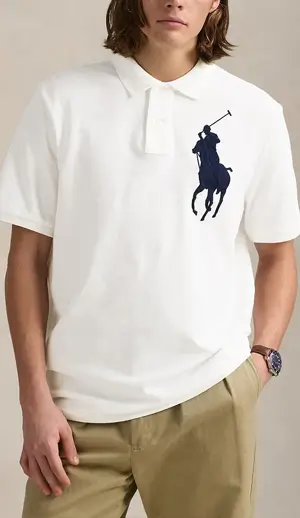
Keep the branding subtle (or better yet, nonexistent). The goal is for people to notice you, not the horse, crocodile or oversized logo stitched across your chest.
Pair it with appropriate pieces. Cohesion is key. A performance polo can work with gym shorts, but a merino wool Johnny collar calls for well-fitted chinos, tailored shorts or quality jeans.
Occupying the perfect sweet spot between a T-shirt and a button-up, a good polo makes you look refined and put together, without sacrificing comfort or looking too “dressy.”
Of course, “good” is the operative word.
When I was growing up, my parents worked at a car dealership where the salesmen would all wear ridiculously baggy polo shirts – or “golf shirts,” as we called them.
As a result, I was brought up believing that a polo’s sleeves should be long enough to cover your elbows and wide enough to smuggle a cantaloupe up each arm, while its torso should be long enough to extend past your butt and wide enough to ensure it looks like a medieval tunic when tucked into your bermuda shorts.
Oh, how wrong I was.
As I got a bit older I started to realize something: all of the style icons I admired looked very different in a polo than the car salesmen I grew up with (and not just because they still had their hair).
Fortunately, finding the right polo isn’t complicated. You just need to understand what makes this menswear staple work, which styles deserve a place in your wardrobe, and how to wear them to maximum modern-classic effect.
Why Wear a Polo Shirt?
A (Very) Brief History of the Polo
Despite the name, the modern polo shirt didn’t actually originate on the polo field.
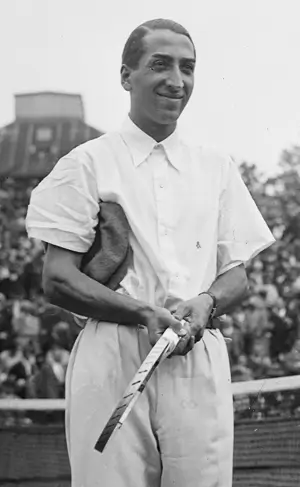
Instead, its roots are often traced to the tennis court, where players in the early 20th century were expected to compete in stiff, long-sleeved button-up shirts, ties and flannel trousers.
[Photo: Wikimedia Commons / Public Domain]
Unsurprisingly, sprinting around a tennis court dressed like a junior accountant wasn’t ideal.
Enter French tennis champion René Lacoste.
Frustrated by the restrictive clothing worn by players of the era, Lacoste designed a lightweight short-sleeved shirt made from breathable cotton piqué fabric, complete with a soft collar and button placket. He first wore the shirt during competition in the late 1920s, helping establish the template for the modern polo.
After retiring from tennis, Lacoste partnered with André Gillier and began producing the shirt commercially through the brand that still bears his name today.
The design quickly spread beyond the court. Golfers found it worked just as well for them as it did for tennis players, casual dressers gobbled it up as an easy alternative to a button-up, and Ralph Lauren damn near perfected it in the early ‘70s.
Eventually, pretty much every menswear brand on earth took a crack at their own designs, and today the basic formula remains remarkably unchanged (which is usually a good sign that somebody got it right the first time).
What Makes It Modern-Classic?
If you’ve read my Modern-Classic Manifesto, you know that modern-classic style is neither about dressing like it’s 1955, nor chasing every trend that comes down the runway.
Instead, it’s about combining timeless style principles with the realities of modern life. And few garments embody that philosophy better than a well-fitted polo.
The polo is to our generation what a dress shirt and a tie was to our grandfathers’: a perfect go-to that can move seamlessly between almost any aspect of modern life.
It works equally well with jeans, chinos, shorts and casual trousers. You can wear it to dinner, on vacation, around town, on a patio or in many modern offices.
In short, it’s versatile as hell, making it perfect for minimalist wardrobes. And timeless as hell, because the basic design continues to look sharp nearly a century after it was invented.
And that combination of timeless style and modern practicality is pretty much the center of the modern-classic bullseye.
7 Types of Polo Shirts Worth Considering
As I’ve alluded to a few times now, not all polos are created equal.
Just as there’s a big difference between a well-cut sport coat and the shiny monstrosities your high school principal wore to chaperone your prom, there’s also a vast difference between the wide variety of polo styles on the market today.
Some lean heavily toward performance and practicality, some skew more refined and sophisticated, and some attempt to pull double-duty from the office to the weekend, while a select few only work in specific situations.
The seven types worth knowing about are below, along with when, where and why you might want to wear each one.
But before we get into the details, a quick note about categorization: not all of these types are mutually exclusive. For instance, it’s possible to find a sweater polo with a Johnny collar, or a merino one in retro resort style.
But these seven archetypes provide a useful framework for understanding the different roles a polo can play in a modern-classic wardrobe, and which ones deserve a place in yours.
1. The Classic Piqué Polo
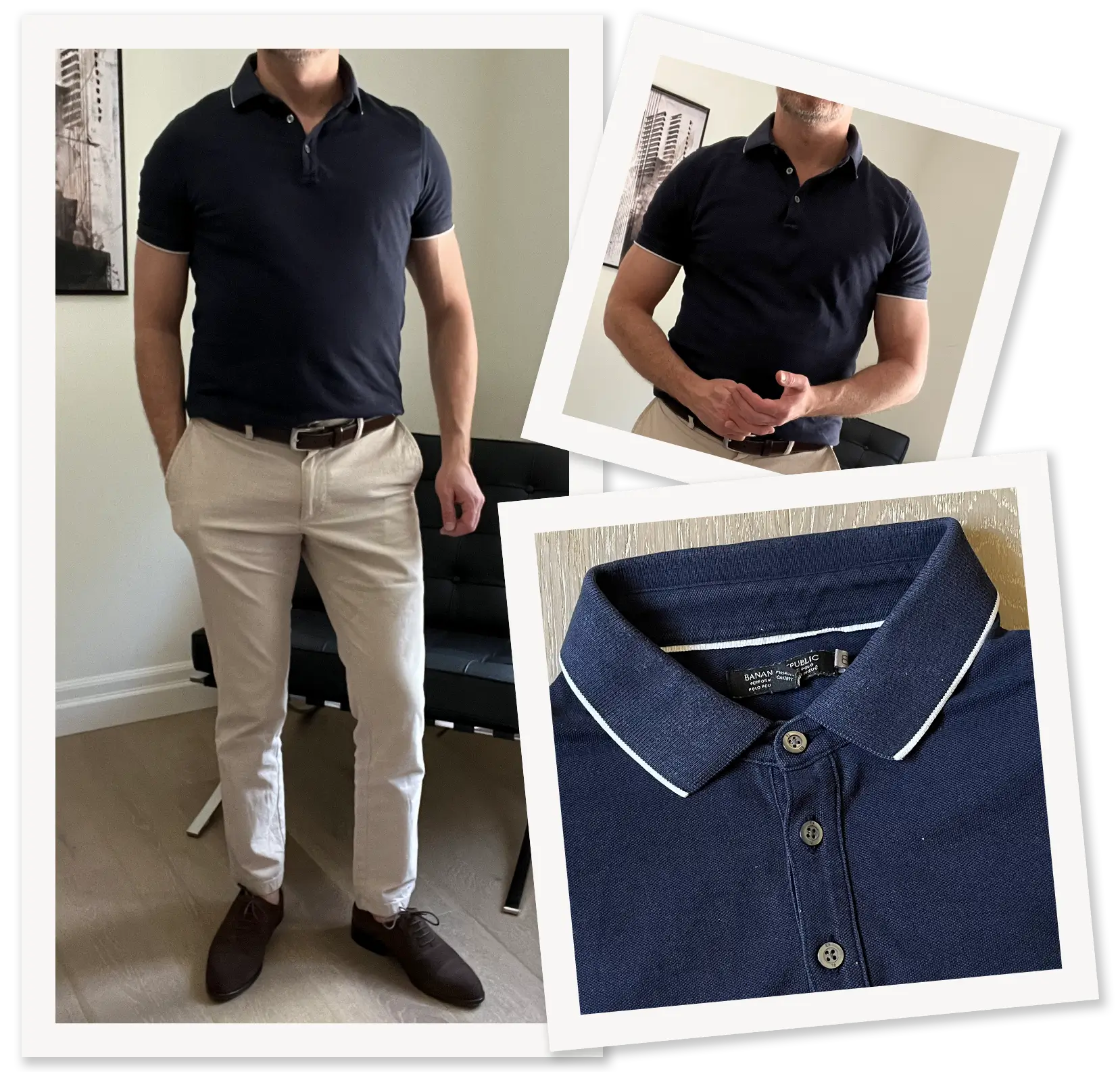
This is the style invented by Lacoste, and to this day it’s still the one most people likely picture when they hear the term “polo shirt.”
Made from textured cotton piqué fabric, it’s breathable, durable and effortlessly versatile. The slightly raised weave adds visual interest while helping the shirt stay comfortable in warm weather, making it one of the easiest pieces in menswear to wear well.
If you’re only going to own one polo shirt, this is where I’d start.
Get the fit right, and it’ll work with virtually everything in a modern-classic wardrobe, from chinos and loafers to shorts and sneakers.
It’s the kind of shirt you can throw on without much thought and still look like you’ve got your act together.
2. The Performance Polo
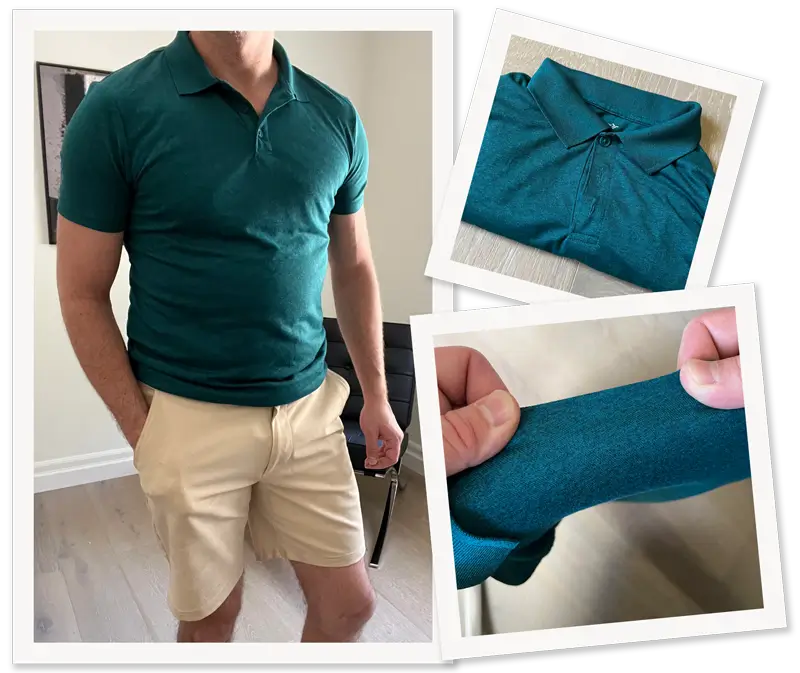
Think of this as the modern evolution of the classic polo.
Performance polos incorporate stretch fabrics, moisture-wicking technology and wrinkle resistance, making them ideal for travel, hot weather and active lifestyles.
The best ones are comfortable enough for a long day on the move, but polished enough to wear somewhere nicer than the gym.
The trick is choosing versions that don’t scream “golf tournament.”
Look for ones that combine technical fabrics with clean, understated styling, giving you all the comfort of athletic wear without making you look like you’re about to discuss your handicap with strangers.
3. The Sweater Polo
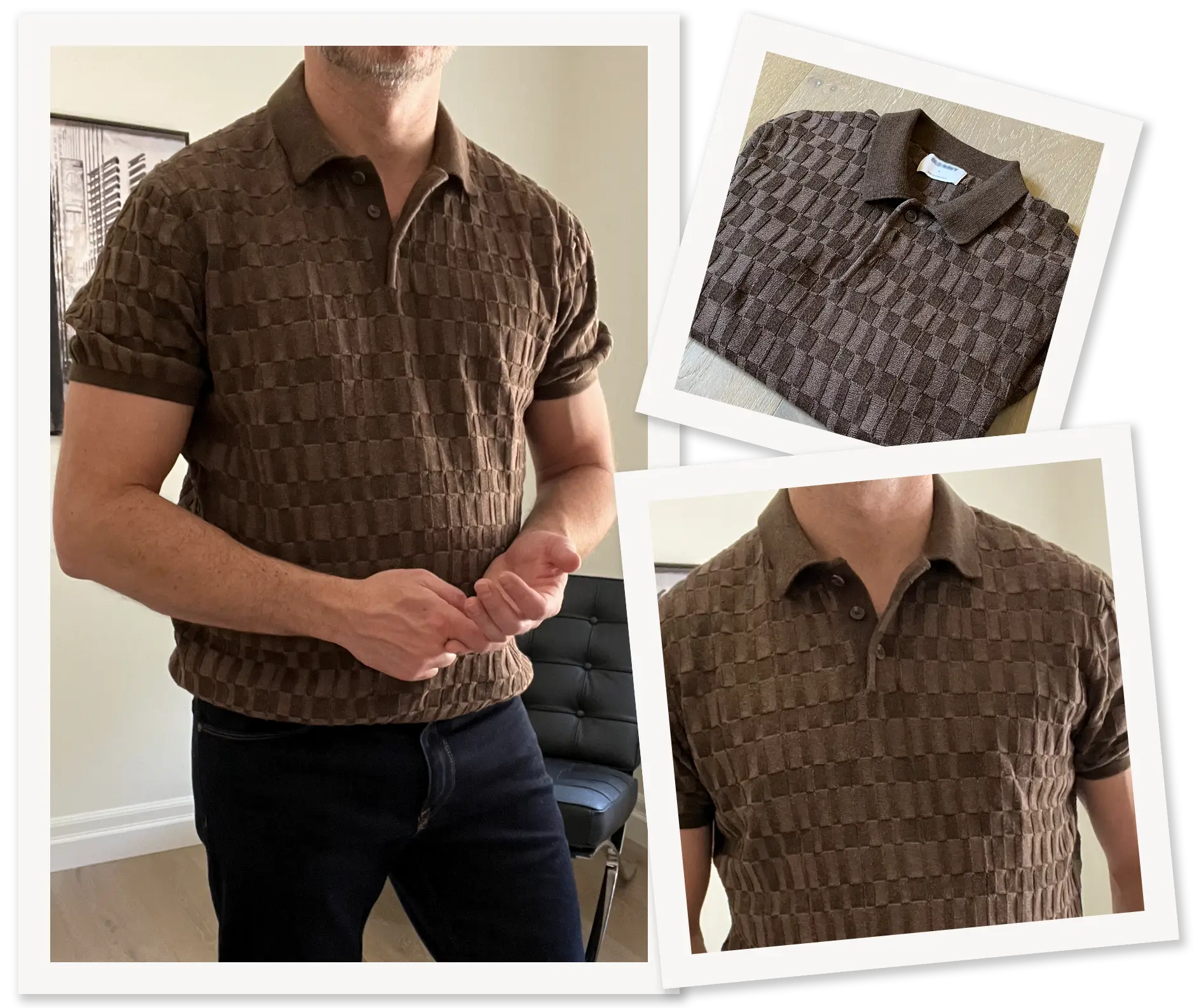
Part polo, part lightweight sweater, all sophistication.
Typically made from cotton, merino wool or knit blends, sweater polos offer a softer texture and more refined appearance than traditional polos. The result is a shirt that feels relaxed while still looking distinctly grown-up.
If the classic piqué polo is your everyday workhorse, the sweater polo is what you reach for when you want to elevate things a notch.
They’re great for transitional seasons like mid-spring and early fall. But they work just as well for summer evenings out on the town, because they pair well with tailored trousers, sport coats and loafers, and the added texture provides some warmth when the temperature starts to cool down.
4. The Merino Wool Polo
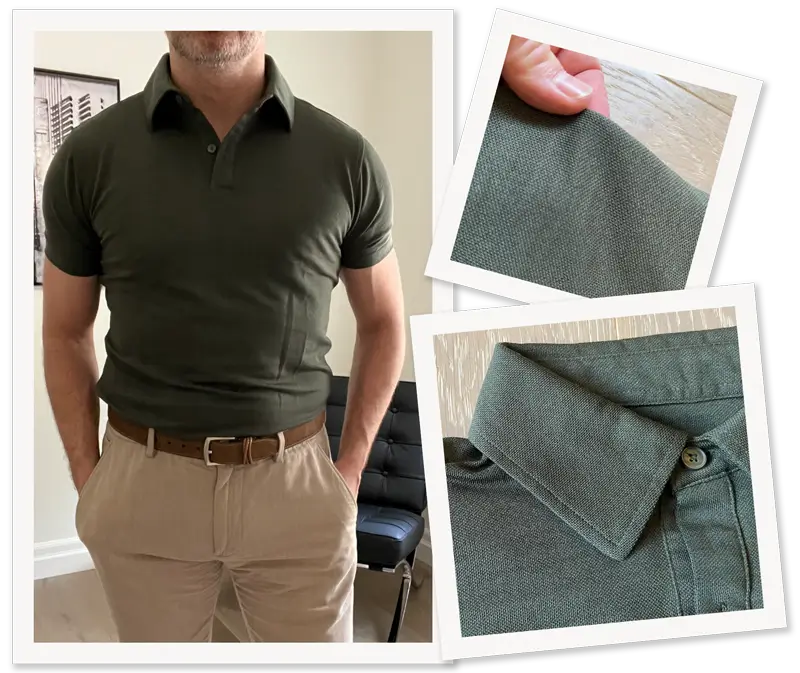
Want a slightly more grown-up and elevated take on the classic pique? Make it merino.
Merino wool offers excellent temperature regulation, natural odour resistance and a luxurious drape that most cotton fabrics can’t quite match.
Despite its reputation as a cold-weather fabric, lightweight merino performs remarkably well throughout much of the year, making it one of the most versatile shirts you can have in wardrobe.
A well-made merino polo can move seamlessly from a casual lunch to a business-casual meeting to dinner afterward without feeling out of place in any of those settings.
Few garments earn their closet space quite as efficiently.
5. The Johnny Collar Polo
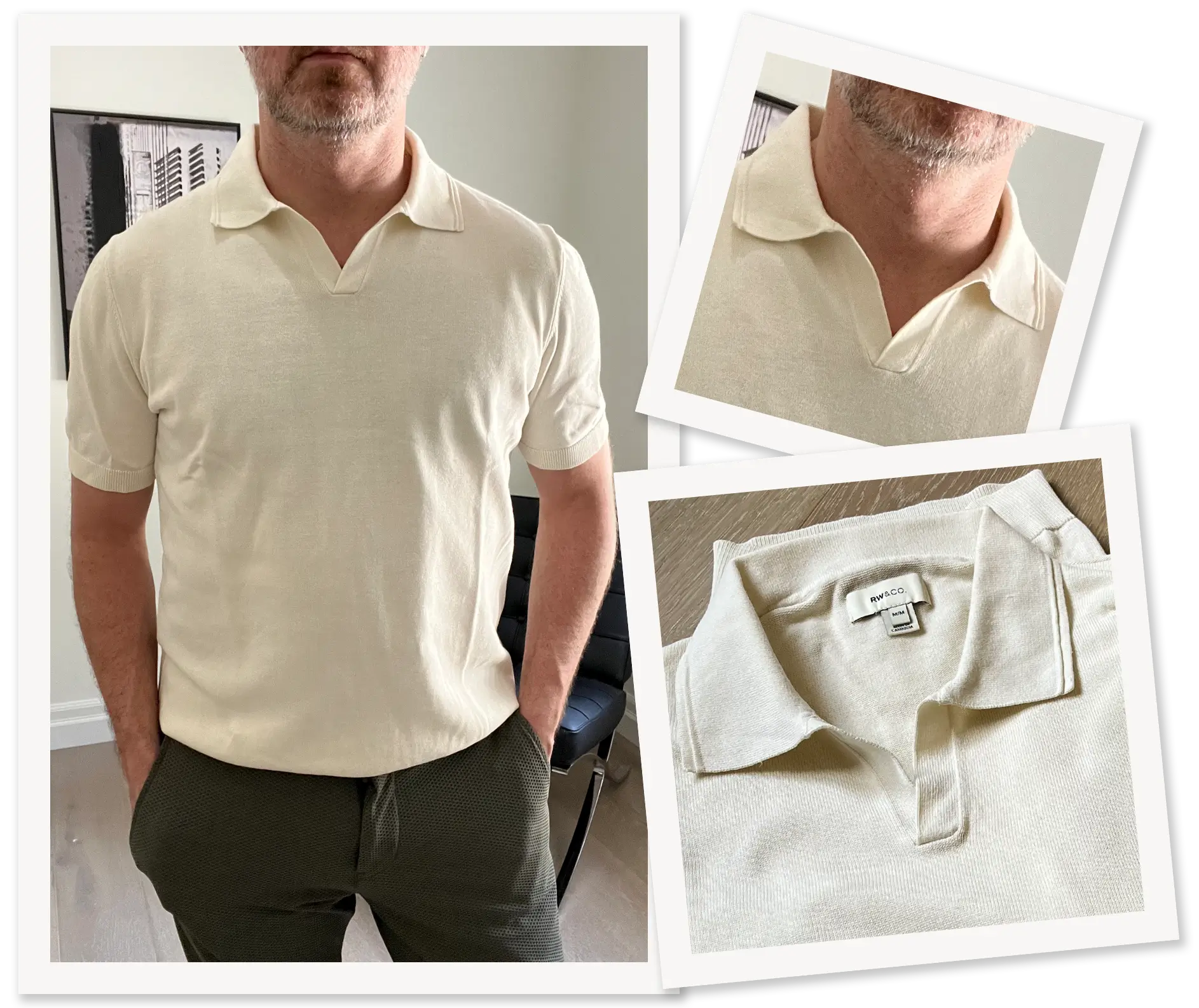
A personal favorite of mine, Johnny collar polos forego buttons and feature an open neckline that creates a more relaxed, slightly retro aesthetic.
The style first gained popularity in the 1960s, when singer Johnny Mathis popularized the look, and it’s enjoyed a major resurgence in recent years thanks to the broader revival of classic menswear.
The open collar creates an effortlessly stylish look that’s perfect for warm weather.
Whether paired with tailored shorts, linen trousers or lightweight chinos, a Johnny collar strikes that elusive balance between casual and sophisticated.
It’s hard to wear one without looking like you’re trying to evoke the midcentury cool of a vintage crooner, even if you’re just headed to Costco.
6. The Luxury Knit Polo
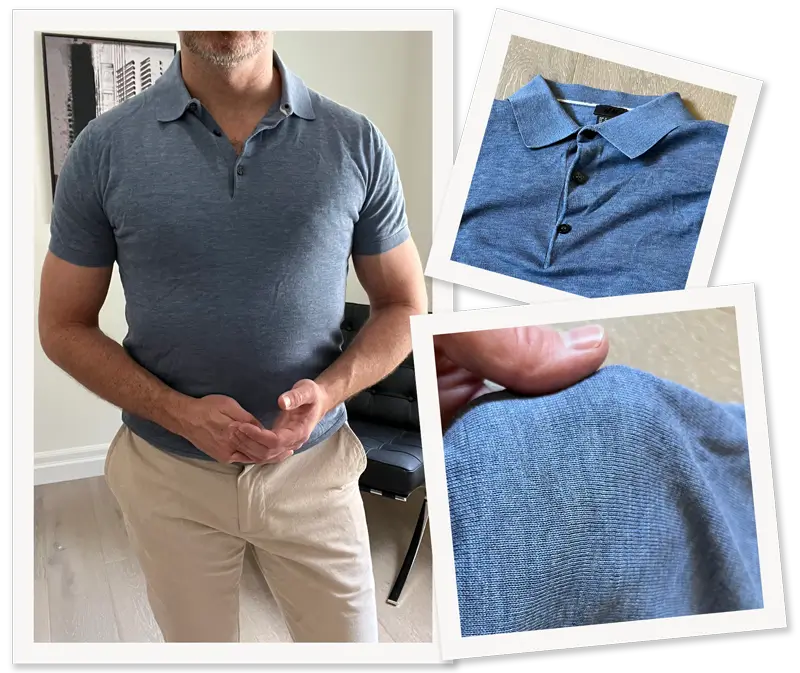
If the sweater polo is sophisticated, the luxury knit polo is downright elegant.
The polo equivalent of upgrading from business class to first, “luxury knit” generally refers to polos that are designed to deliver maximum refinement while maintaining the comfort that makes polos appealing in the first place.
They’re often crafted from premium materials like silk-cotton blends, fine-gauge knits or textured Italian fabrics, and pair exceptionally well with tailored trousers, suede loafers and sport coats.
As the most sophisticated version of a polo, they’re perfect for date nights, upscale restaurants and occasions where you want to look polished and refined, but not overly formal.
7. The Retro Resort Polo
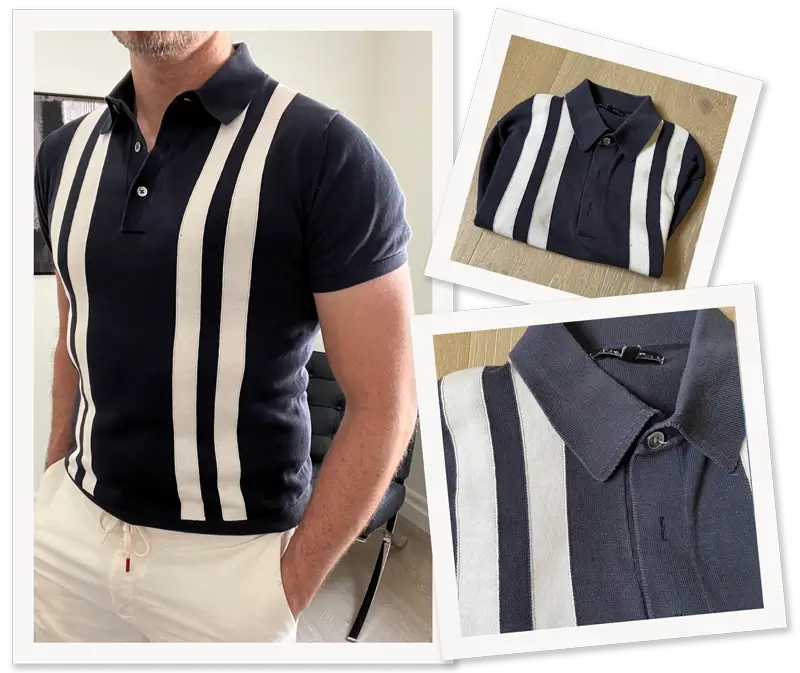
While it’s hard to put your finger on exactly what makes a resort polo, the best way to describe it may be this: these are the shirts that look like they were custom-made for sipping something expensive beside a body of water.
Retro resort polos typically feature details like textured knits, crochet construction, bold stripes, camp-style collars or vintage-inspired patterns that evoke the glamour of Mediterranean holidays and mid-century leisurewear.
In lesser hands, that description could sound dangerously close to “retired guy on a cruise.”
But done properly, a retro resort polo delivers personality, confidence and style in a way few garments can.
Just pair it with modern, well-fitted pieces and let the shirt do the talking.
How to Wear a Polo Shirt in Modern-Classic Style
As mentioned, one of the reasons the polo has remained popular for nearly a century is that it’s as simple as it is stylish.
But be warned: when it comes to menswear, simple isn’t the same as easy.
Even when you limit yourself to one of the seven styles above, you still have to nail the fit, pair it with the right pieces and avoid a few common mistakes to get the most out of the look.
Here’s a quick guide that will show you how to make your polo look (shameless plug alert!) Sharp as Hell.
Polo Shirt Fit Guide
Shoulders
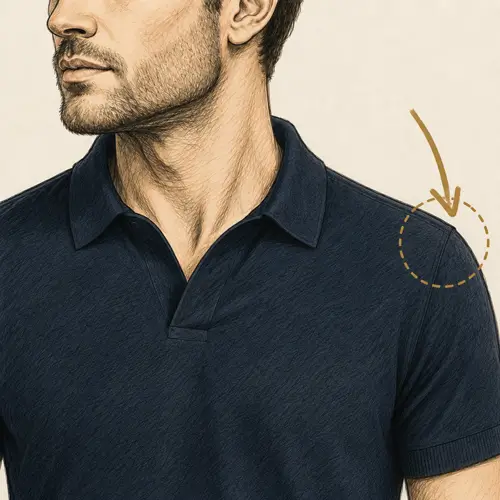
As with all shirts, the shoulder seams of your polo should sit as close as possible to the edge of your shoulders, creating a clean silhouette that allows the shirt to drape properly throughout the rest of the body.
When the seams sit too far inward, the shirt looks undersized and restrictive. When they extend too far outward, the entire garment starts to look sloppy, regardless of how well the rest of it fits.
(The dreaded “golf shirts” worn by the car salesmen I mentioned above always had shoulders that were way too wide.)
As a general rule, the shoulder fit is one of the hardest aspects of a shirt to alter or compensate for.
If the shoulders don’t fit properly, you’re usually better off trying a different size or brand rather than hoping the rest of the shirt will somehow make up for it.
Sleeves
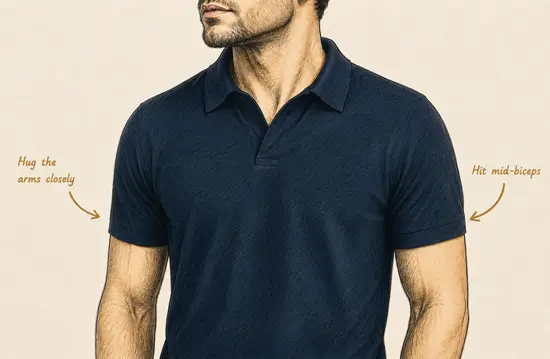
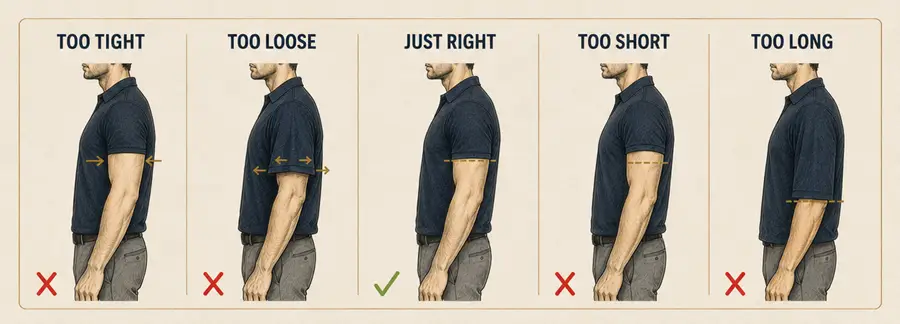
Let’s start with the width/circumference of the sleeves. They should lightly skim the arms without cutting off circulation, creating enough shape to suggest you occasionally lift something heavier than a remote control, without looking painted on.
A lot of guys make the mistake of sizing up to gain extra room through the torso, only to end up with oversized sleeves that flap around every time a breeze rolls through.
And some, particularly my elder millennial brethren, still lean too far into the slim fit phase of the early 2010s, opting for sleeves so tight they look like they’re cutting off circulation.
The sweet spot sits somewhere in between: fitted enough to create shape, relaxed enough to remain comfortable.
As for length, the rule of thumb is pretty simple: aim for sleeves that end roughly around the middle of your bicep.
Any shorter than that, and it starts to look more like a woman’s blouse. Any longer, and you throw off the proportions of the shirt, making it look like it’s too big even if it fits well everywhere else.
Chest & Torso
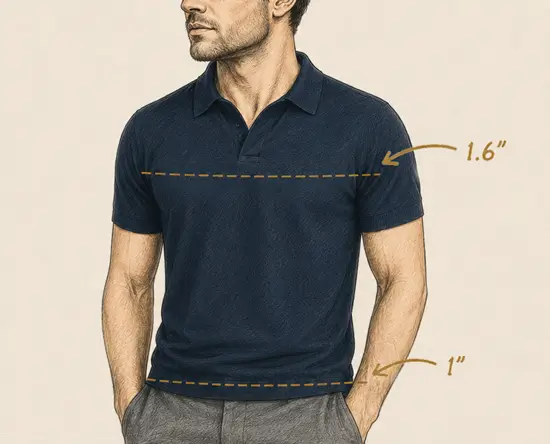
When it comes to the main body of your polo, think skimming, not squeezing.
Here, the main idea is that your polo should follow the shape of your body, not cling to it.
Basically, you want enough room to move comfortably, while still creating a clean silhouette that complies with the Golden Ratio.
Too tight and it looks like you’re trying to show off. Too loose and it starts to resemble the oversized “golf shirts” that have spent decades giving polos a bad reputation.
Length
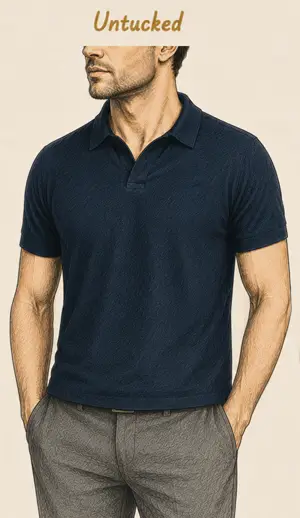
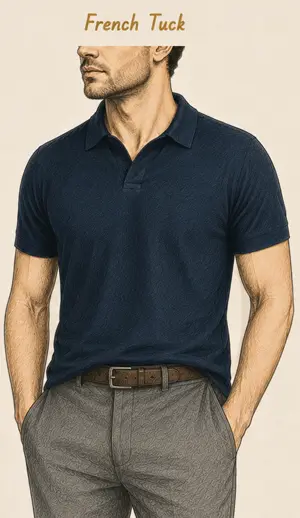
The length of your polo is arguably the most variable measurement, because there are a few different ways to go.
If you want to wear it untucked, then the hem should hit about half an inch below your belt, which is long enough to keep your stomach covered, but not so long that you look sloppy.
But one of my favorite moves to pull with a polo – and one that helps distinguish stylish guys from the casually dressed masses – is to rock one with a French tuck.
I love the French tuck because it looks both refined and relaxed all at the same time, which is also the vibe you should be aiming for with your polo.
If you want to go this route, opt for a polo that has a bit more length through the torso, ideally hitting around mid-fly or so. (Any longer than that, and the shirt will likely billow out too much when tucked in, throwing off your proportions.)
Styling Tips
Pair It With Chinos
This is one of the easiest modern-classic outfits you’ll ever assemble.
A navy polo and khaki chinos is basically the menswear equivalent of a layup. A black polo with green chinos is a modern, masculine staple. A light blue polo with white chinos is a perfect summer date outfit.
You get the idea.
The combination works because both pieces occupy the same versatile middle ground between casual and dressy. Together, they create an outfit that’s appropriate damn near everywhere: from weekend errands and casual drinks to nice dinners and even most modern offices.
If you’re ever unsure what to wear, there’s a strong chance that a polo and chinos will get the job done. That’s part of what makes both garments such valuable additions to a modern-classic wardrobe.
Use a Polo to Elevate Your Shorts
A polo instantly makes shorts look more intentional and put together.
Especially when paired with tailored shorts and quality footwear.
The key word there is tailored.
A polo can only elevate an outfit so much if it’s paired with oversized cargo shorts that feature enough pockets to store emergency supplies for a small village. Instead, opt for clean, well-fitting shorts in classic colors like navy, khaki, olive or gray.
Finish the outfit with loafers, boat shoes or clean sneakers and you’ll strike the perfect balance between relaxed and refined.
Layer It Under a Sport Coat
Sweater polos and merino polos work particularly well here.
The result is more relaxed than a dress shirt but noticeably sharper than a T-shirt.
This combination has become increasingly popular in recent years because it delivers many of the benefits of tailoring without feeling overly formal. You still get the structure and sophistication of a jacket, but the polo keeps things approachable and comfortable.
For best results, stick with polos that feature a clean collar and substantial fabric. A thin, floppy polo tends to disappear under a jacket, while a quality knit polo holds its own beautifully.
Keep the Branding Subtle
(or better yet, nonexistent)
Respectable ↓
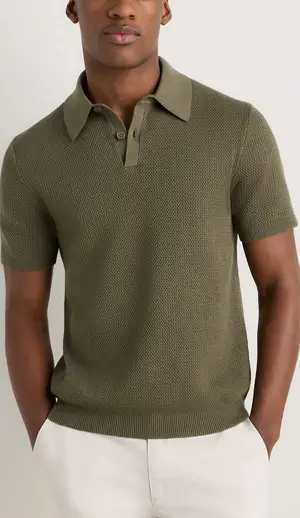
Acceptable ↓
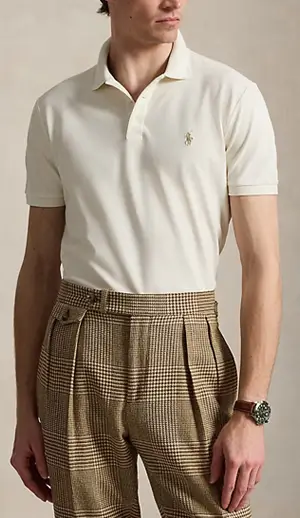
Reprehensible ↓
*presumaby by way of Satan
A small logo is fine.
A logo large enough to be visible from space is generally less fine.
One of the defining characteristics of classic style is restraint. The goal is to draw attention to the man wearing the clothes, not the brand that made them.
That’s why many of the most versatile polos on the market feature little to no visible branding at all.
If a logo is present, it should feel like a minor detail rather than the headline act. Remember: you’re trying to look like a well-dressed adult, not a walking billboard.
To Pop or Not to Pop: That is the Question
just kidding! Never (ever, ever, ever) F—ing pop
I really wish this went without saying, but unfortunately I still see far too many men walking around with their polo collars flipped up, so I guess it has to be said:
Never. Flip. Up. Your. Collar.
(Or anyone else’s, for that matter.)
Yes, flipping up the collar of outerwear like peacoats or overcoats can help frame your face and give you a devil-may-care vibe.
And yes, vintage golfers like Johnny Miller used to rock popped collars on the course to protect their necks from the sun (and look cool doing it, depending who you ask).
And yes, The Wall Street Journal feels so conflicted about the issue that they write a fresh article about it every 10 years or so.
But let me settle this once and for all: the best only way to wear a polo correctly is to keep the collar down.
Popping the collar may help protect your neck from the sun. But guess what? So does sunscreen.
And sunscreen has the distinct advantage of not making you look like a douchebag frat bro, or a dog wearing a cone around its neck to keep from licking its genitals.
So, while the choice is technically yours, it’s actually a no-brainer.
The only way to keep your chances of being taken seriously up, is to keep your collar down.
Choose Fabrics That Meet the Moment
Performance polos excel in casual and active settings.
Sweater polos and merino polos are better choices when you want to look especially refined.
One of the easiest ways to elevate your style is simply matching the texture and formality of your clothing to the situation at hand.
Heading to the golf course, airport or a day spent outdoors? A performance polo makes perfect sense.
Meeting friends for dinner, heading out on a date or dressing for a business-casual office? A merino or knit polo will usually create a more polished impression.
The beauty of understanding the different polo archetypes is that you’ll always know which one is best suited to the occasion in front of you.
and finally…
Where to Get ‘Em
Now that you know how to identify a great polo, the next question is obvious:
Where can you find them?
The answer isn’t always the brands you’d expect.
I own an embarrassing number of polos, and if I’ve learned anything in my years grappling with a shopping addiction researching the topic, it’s that the best polos don’t always come from the brands you’d expect.
Over the years I’ve shopped everywhere from bargain-basement retailers to luxury labels, and learned that price alone tells you very little.
Some affordable brands consistently outperform their premium competitors, while some expensive ones simply aren’t worth the markup.
To help you sort the wheat from the chaff, I’ve put together a separate roundup of the polo brands I recommend most, organized by the type of polo each brand does best.