


Adapted from Sharp as Hell
Developed through years of research and personal testing, this approach to standing out from the crowd was adapted from Dave Bowden’s Amazon-bestselling book, Sharp as Hell: A No-BS Style Book For Men.
Key Takeaways
If you only remember three things from this guide, make ’em these:
1. Dress for the occasion.
The key to looking sharp in any given situation is to understand what’s appropriate for that particular moment and environment.
2. Aim (a little) higher.
Try to paint a vivid picture in your mind of the situation that you’re dressing for. Once you have a clear baseline in mind, think about ways you can look about 10-to-15% sharper than what’s expected for the situation.
3. Confidence compounds your style.
Dressing slightly better than required makes you feel good. That helps you stand up a bit straighter and carry yourself with more confidence, which in turn makes you look even more compelling.
I used to work with a guy who dressed like Don Draper.
He had a classic gentleman’s haircut, wore well-cut suits in solid colors, and generally always looked put together.
And yet, everyone made fun of him.

[image: Digital Art]
To his face, people would say things like, “You look so snazzy.” But behind his back, people would tease him relentlessly, poking fun at everything from his pocket square to his pomaded side-part.
Why would he come in for so much mockery when he was so well dressed? Well, partly because my coworkers were dicks.
But mostly because we worked in a very casual office, where people were more likely to wear cargo shorts and Birkenstock sandals than a proper suit and dress shoes. By any objective measure, my suited-up colleague looked great; but by the subjective standards of our office, he missed the mark entirely.
In that environment, he looked more like a guy doing Mad Men cosplay than a competent modern knowledge worker who should be taken seriously.

[image: Digital Art]
What my Don Draper-inspired colleague failed to understand is a concept I call Situational Appropriateness: the notion that looking good isn’t just about what you wear, it’s about the context and situation in which you wear it.
This is one facet of self-presentation that most guys overlook (or at least, under-value). But as my erstwhile colleague learned the hard way, it has a huge impact on the way people perceive you.
The (Obvious) Advantage of Situational Appropriateness
Let’s get the obvious part out of the way first.
There are a lot of ways to look sharp. James Bond in a tuxedo? For my money, it doesn’t get sharper. But let’s be honest: we live in a casual world, and opportunities to wear a tux are few and far between.
When I’m out grocery shopping, working in my business-casual office, meeting friends at the pub, or doing any of a million other regular things, wearing a tuxedo would look downright ridiculous.
That’s why, while it’s important to understand useful proportion guidelines like The Golden Ratio, you also need to have a sense of what’s appropriate for a given situation.
No one knows this better than 007 himself. When he goes to a swellegant party to pursue a lead (as he does at least once per film), he wears a full tux.
But the real reason Bond has become such a style icon is because, even when he’s off duty, his casual clothes are so on point that he’s still the sharpest dressed guy in the room.
One of my favorite instances comes from Quantum of Solace, which was probably the worst of Daniel Craig’s five Bond movies, but a great example of how to look sharp in any situation.
When he goes to meet Felix Leiter for a quick cerveza at a Bolivian bar, he wears a casual but still very fashionable Harrington jacket, polo shirt, slim fit white jeans and chukka boots, which he had been wearing earlier during a (similarly stylish) motorcycle chase:
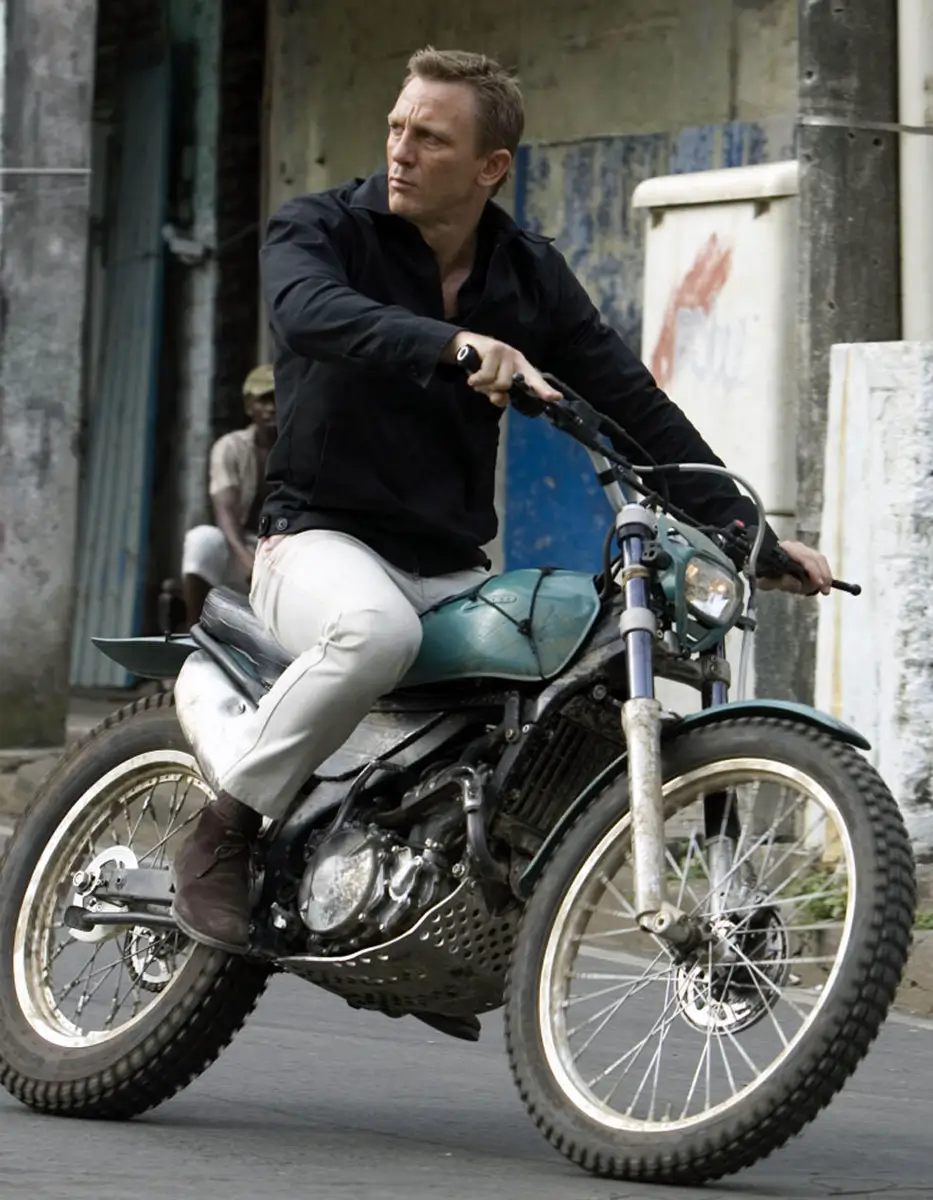
There’s one operative phrase in the previous sentence that stands out from the rest, and it’s the part of Situational Appropriateness that most guys miss: “still very fashionable.”
Situational Appropriateness:
Looking good isn’t just about what you wear, it’s about the context and situation in which you wear it.
The Less Obvious (But More Impactful) Side of Situational Appropriateness
James Bond isn’t going to wear a tuxedo to a dusty Bolivian watering hole, because that would be idiotic; he knows a small bar calls for laid back, casual clothes.
(Plus, all that dust would be absolute hell on patent leather dress shoes.)
But he’s not going to slum it in board shorts and flip flops, either. Instead he opts for a version of smart casual that looks perfectly at home in a quiet taverna, but quite a bit more stylish and put together than the other guys there.
In that part of the movie, Bond is employing what I like to call The 10% Rule. When deciding what to wear in a given situation, try to imagine what most other guys will be wearing, then aim to dress 10-to-15 percent sharper than what’s expected.
The 10% isn’t an exact measurement; it’s a reminder to look a little more put together than expected, without necessarily dressing more formally.
When other guys are wearing schlubby sports jerseys, the guy wearing a well-fitted polo or classic Harrington jacket stylishly stands out.
How to Use the 10% Rule in the Real World
Let’s be honest: James Bond is a fictional character whose wardrobe is highly curated, and the other characters around him are specifically dressed down to make him look even better.
So it’s not that hard for Daniel Craig, a handsome movie star with a team of stylists working behind him, to stand out from a cast of extras who were specifically cast to make him look good.
But while normal guys like you and me may never stand out quite as much as 007, we can still use The 10% Rule to up our game in most real-world situations.
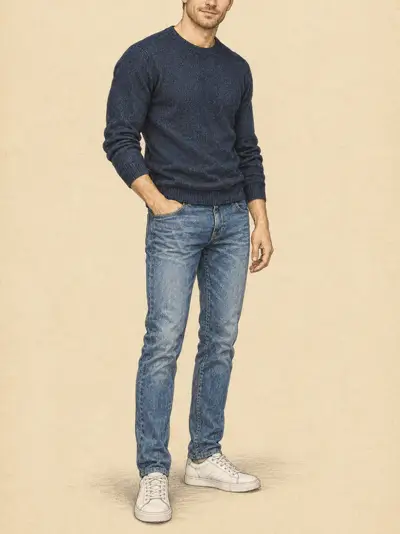
For instance, back when my friends and I were all single and using dating apps, some of my female friends would often lament what they called “the first date uniform.” Apparently, most of the guys my friends were meeting on the apps all showed up wearing some variation of the same outfit: a crew neck sweater, jeans, and sneakers:
[image: Digital Art]
And while there’s nothing particularly wrong with that look, (assuming it fits well and the colors work together, of course), it’s hard to make a powerful first impression when you’re dressed just like every other guy.
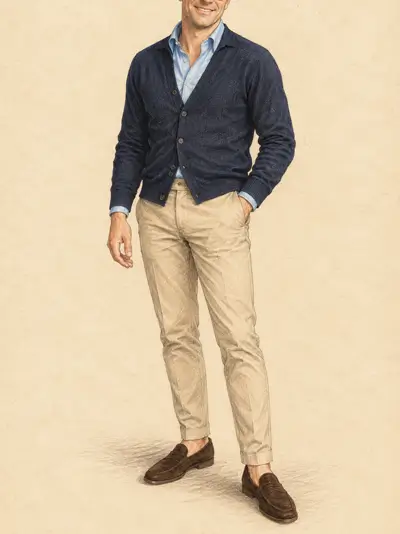
To break the pattern and try to stand out from the crowd, I decided to adopt a different first date uniform. Whenever I would meet someone new for coffee or drinks, I would wear a button-down shirt under a cardigan, well-tapered chinos, and a nice-but-not-too-dressy pair of suede loafers:
[image: Digital Art]
I would keep the look casual by making a few small shirt adjustments, like leaving the top two buttons of my shirt unbuttoned. And sometimes I’d even pair the look with sneakers, so I actually wasn’t dressed that differently from the scores of guys wearing “the first date uniform.”
But the collared shirt, cardigan and chinos all projected a put-together kind of confidence that helped me feel more comfortable, giving me a small but noticeable edge that helped me stand out from all the other guys who my date had swiped right on.
And at the risk of sounding less than humble, it worked like a charm.
My dates would often compliment me on my outfit choices, which made me feel good about myself, hold myself up a little higher, and carry myself with yet more confidence, creating a virtuous cycle that all started by dressing just 10 to 15 percent better than most other guys.
The 10% Rule in Different Settings
My first-date outfit is just one example. Here’s how you can apply the same principle in other everyday situations.
Keep in mind, these aren’t universal dress codes; start with what’s normal for your particular setting, then make a small upgrade that still feels at home there.
| Situation | Typical baseline | A small upgrade that still fits |
|---|---|---|
| Casual Office | T-shirt, jeans, sneakers | Well-fitting knit polo, dark jeans, clean sneakers |
| Coffee Date | Crew neck sweater, jeans, sneakers | Open-collar shirt, cardigan, tapered chinos, suede loafers |
| Casual Drinks | Hoodie, jeans, running shoes | Textured sweater, dark jeans, suede chukkas |
| Backyard BBQ | Graphic tee, cargo shorts, sandals | Plain tee or casual polo, tailored shorts, simple sneakers |
How to Figure Out What’s Appropriate
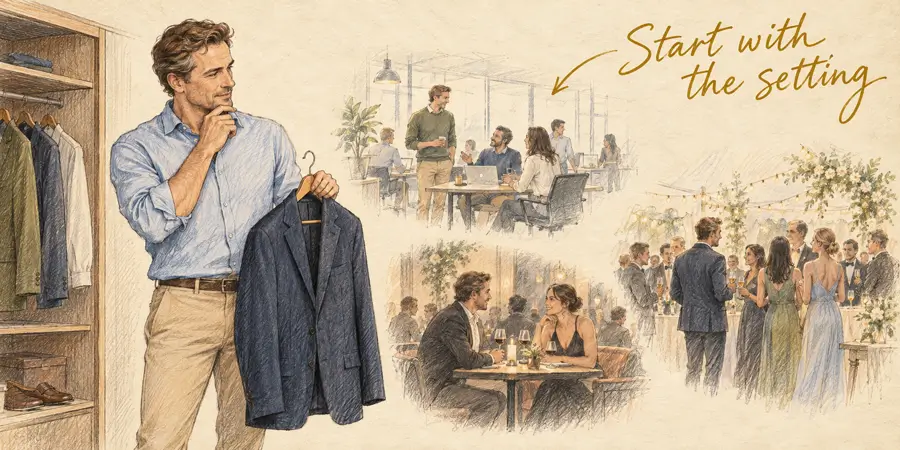
The 10% Rule is easy to apply when you know what everyone else will be wearing. But what if you’re visiting a new office, going to an unfamiliar restaurant, or attending an event where you don’t know anyone?
The good news is you don’t need to predict every outfit in the room, you just need enough information to establish a reasonable baseline.
Below are a few tips to help you paint that picture in your mind.
Start with the stated dress code.
(Duh…)
Obviously, if the invitation says semi-formal attire, or your employer requires business casual, start there. Looking sharp means working within those expectations, even if you suspect other guys will ignore them.
Look for clues about the setting.
Check recent photos of the venue, ideally showing guests rather than just an empty room.
Consider what you’ll be doing, when you’ll be there, and who you’ll be with. Saturday afternoon on a pub patio could be a totally different vibe (and call for a different outfit) than Friday evening at the same pub.
If getting it wrong would matter, ask.
For a wedding, job interview or important work event, a quick question beats an elaborate guessing game.
Ask the host or your contact what people typically wear. “Would a jacket make sense, or is it more casual?” will usually get you a useful answer.
Choose one or two small upgrades.
Once you’ve established the baseline, look for ways to improve the outfit without jumping into a different dress code.
You don’t have to add a blazer every time you want to look better; sometimes the sharpest move is wearing a slightly more refined version of what already belongs in the room.
That might mean better-fitting jeans, a dressier type of shoe, a sweater with some texture, or colors that work particularly well together.
Of course, it’s also important to use common sense, and set style aside when necessary. At funerals and other solemn occasions, for example, standing out shouldn’t be the goal. In those cases, prioritize respect and discretion.
“I know I don’t have to dress this well—I choose to.”
That’s the real strength of Situational Appropriateness. Whether you’re at work, on a date, or in any other social situation, if you feel like you’re dressed too far outside of the norm, your insecurity is going to show, which will in turn make you seem less compelling.
By contrast, when you know that you’re not only within the proper dress code for whatever situation you’re in, but at the high end of the style spectrum for that particular instance, you’ll likely find that you carry yourself with a little more confidence, which will further enhance your (already quite stylish) look.
As a result, you’ll send a powerful message: “I know I don’t have to dress this well—I choose to.”