


M en’s boots come in a seemingly endless number of styles, but you don’t need to know your Balmorals from your Jodhpurs to build a sharp, versatile wardrobe.
For most guys, there are five types of boots that embody the modern-classic aesthetic, which will cover nearly everything you actually need:
- Chukkas
- Chelseas
- Dress boots
- Work boots, and
- Service boots
Each one occupies a different spot on the spectrum from sleek and sophisticated to rugged and casual, which makes choosing the right pair less about memorizing boot terminology and more about understanding what works with the clothes you already wear.
Below, I’ll break down the defining features of each essential style, explain where and how to wear them, and show you examples from my own collection.
Then we’ll look at a few more specialized boot styles that aren’t essential, but are worth knowing if they fit your personal style.
The Essentials:
The Boot Styles Most Men Can Actually Use
Chukka Boots, aka Desert Boots
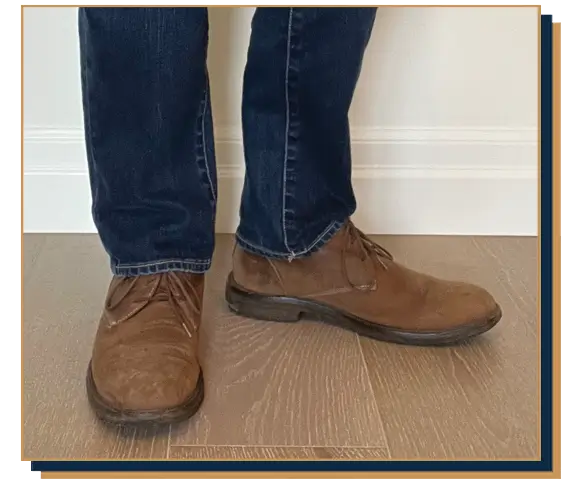
Boots: Johnston & Murphy Copelands
Defining Features:
- Ankle-high length
- Typically made of suede or leather
- Two or three pairs of eyelets for lacing
- Plain toe
- Thin soles, often made of crepe rubber
If you’re just starting to build out your footwear collection, a good pair of chukkas are probably the first boots you should add.
Ankle-high boots usually made with a leather or suede upper, chukkas were initially worn by British soldiers during World War II, and have remained a popular choice among style-conscious guys ever since.
(The phrase Chukka originally referred to a specific type of desert boot that resembled the specific boots worn in the Western Desert Campaign, but nowadays “chukkas” and “desert boots” are more or less interchangeable.)
Their defining feature is their crepe sole, a thin sole made of crepe rubber, which is essentially coagulated latex, or natural rubber.
Crepe soles have a distinctive, textured appearance that’s somewhat crinkled or wrinkled, giving them a sort of rugged or “raw” look, which evokes a rustic, natural and timelessly masculine aesthetic.
When and Where to Wear ‘Em:
- Casual outings
- Paired with chinos or jeans
- With rolled-up denim for a relaxed look
Chukka boots are a great choice for casual wear because they’re incredibly versatile.
They can be paired with everything from super laid back blue jeans to dressier chinos and khakis, and work just as well in a business casual setting as they do on date night.
They work great in the fall, but they’re probably the best men’s boots for warmer months thanks to their lightweight design.
Chelsea Boots
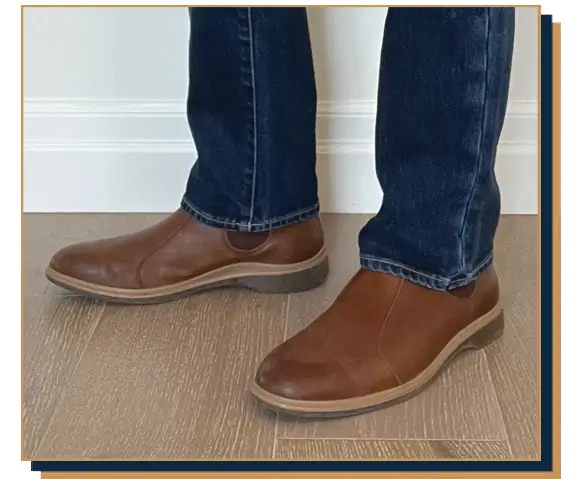
Boots: Amberjack Chelseas
Defining Features:
- Ankle-high design
- Characterized by elastic side panel
- Pull tab at the back for easy on and off
- Streamlined appearance
- Often made of leather or suede
Chelsea boots are ankle-length boots that forego laces in favor of elastic side panels and a pull tab at the back.
Chelseas date back to the time of Queen Victoria and their invention is actually credited to her personal shoemaker, Joseph Sparkes Hall.
Though they were designed for the queen, they were quickly adopted by both men and women as a comfortable, slip-on alternative to the more restrictive boots of the era.
Over time, their sleek and minimalistic design has become a timeless fashion staple, and today a good pair of Chelsea boots appeals to a wide range of styles and subcultures, including everyone from trail-hiking outdoorsmen to suit-wearing city slickers.
When and Where to Wear ‘Em:
- Casual to semi-formal settings
- With jeans, chinos, or suits
- Suitable for both day and night outings
Chelsea boots are incredibly versatile and can be adapted to a wide range of settings, from extremely casual to very formal.
Their streamlined silhouette allows them to blend seamlessly with various styles, making them a valuable addition to any wardrobe.
In a more formal setting like an office or wedding, Chelseas with a refined toe shape can be paired with suits, dress pants and dress shirts, offering a sleek alternative to traditional dress shoes.
For casual getups, a classic Chelsea boot in leather or suede works well with jeans, chinos, and casual shirts or tees.
In these more relaxed settings, you can opt for a sharp toe shape to add a touch of refinement to your ‘fit, or go for the more rounded toe often found on popular models like Blundstones, which gives off a more workman-like vibe.
Dress Boots
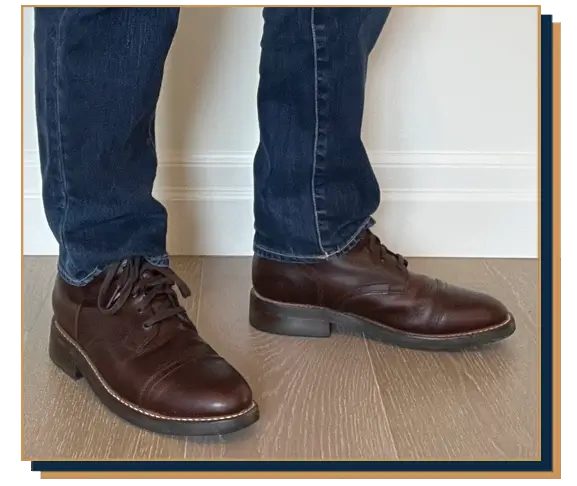
Defining Features:
- Sleek, relatively streamlined silhouette
- Usually made from smooth leather or fine suede
- Thin-to-moderate sole without heavy lugging
- Minimal hardware and rugged detailing
- Designed to pair well with tailored trousers
Unlike Chelsea or chukka boots, “dress boot” doesn’t refer to one specific design. It’s more of an umbrella term for boots that are sleek and refined enough to fill the same role as a pair of dress shoes.
They can be lace-ups, Chelseas or even more traditional styles like Balmoral boots. What matters most is the overall visual weight:
Dress boots tend to have slimmer soles, svelter toe shapes cleaner lines and more refined leather than their rugged counterparts.
With that said, my Thursday Captains (pictured above) are a good example of how blurry the line can get.
Their cap toe and substantial construction give them some of the rugged character of a service boot, but the smooth leather and relatively streamlined silhouette make them easy to dress up.
When and Where to Wear ‘Em:
- Smart-casual and business-casual outfits
- With chinos, dress pants or dark jeans
- With suits, provided the boots are sleek and refined enough
- Fall and winter occasions when dress shoes feel a little insubstantial
The easiest way to style dress boots is to match their visual weight to the rest of your outfit.
A sleek, dark leather boot with a thin sole can work much like an Oxford or Derby, making it a natural partner for tailored trousers and even a suit.
A chunkier pair with a rounder toe or heavier sole moves further down the formality scale, working better with chinos or dark denim.
That’s also why I wouldn’t get too hung up on what a manufacturer calls its boots. Look at the shape, sole and finish rather than the label.
If the overall effect is sleek and sophisticated, treat them like dress shoes. If they’re chunky and rugged, treat them like casual boots.
Work Boots
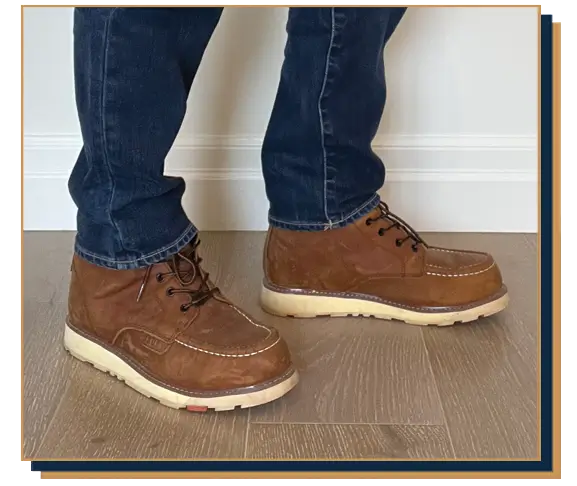
Boots: Brunt
Defining Features:
- Durable and often heavy-duty
- Traction-focused soles
- Ankle to mid-calf length
- May have steel toes or other safety features
Another type of boot whose name more-or-less sums it up, work boots are sturdy footwear designed primarily for labor-intensive tasks and jobs that require enhanced protection for the feet.
These boots often feature reinforced toes (like steel toes), durable materials, and slip-resistant soles.
They prioritize functionality, safety, and comfort, especially for prolonged wear in demanding environments such as construction sites, factories, and farms.
When and Where to Wear ‘Em:
- On job sites or when completing heavy-duty tasks (obviously)
- In casual settings where you might otherwise wear boots like chukkas or service boots
- Paired with work pants or jeans
While they were originally designed for job sites, their hard-knock appeal has made rugged work boots a fashionable choice for everyday wear.
For casual settings, lighter boots that don’t have a heavy safety toe can be paired with jeans, khakis, or casual trousers to give you a grounded, hard-working vibe.
Flannel shirts, jackets, and vests all complement this aesthetic, but you want to be a bit careful here.
It’s one thing to give your look coherence by wearing clothes that all give off the same vibe.
But if you lean into the look too much, you run the risk of looking less like a casually stylish man and more like a Village People cosplayer.
Service Boots, aka Combat Boots
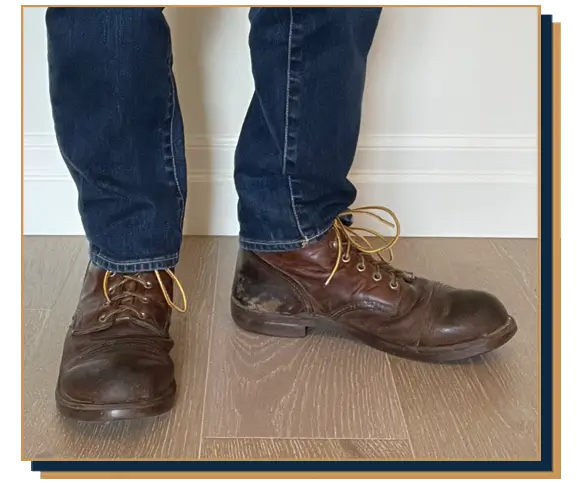
Boots: Red Wing Iron Rangers
Defining Features:
- Robust and durable
- High-top design, typically above the ankle
- Lacing system can extend to the top of the boot
- Originally designed for military service, but now popular in fashion as well
Like chukkas, service boots – often referred to as combat or military boots – have roots in the military.
They were originally designed as multi-purpose leather boots that would serve soldiers in various conditions, providing durability and protection.
Characterized by their rugged build and ankle-length or higher design, they often come with a cap toe detail (on which more below), and are constructed to handle wear and tear while ensuring comfort.
When and Where to Wear ‘Em:
- Casual wear or urban exploration
- Paired with casual pants like cargo pants, jeans, khakis and chinos
- Can also be paired with a leather jacket or field jacket for a rugged appearance that evokes their military origins
They’re a popular choice because they lend a rugged and masculine vibe to the types of pants that most guys already have in their wardrobes, including jeans, cargos, chinos and khakis.
With that said, it’s worth noting that they’re definitely on the more casual side—these aren’t the best boots for pairing with a suit or a good pair of dress pants.
Instead, they go well with casual staples like flannel shirts, tees, or casual jackets.
They’re a favorite for winter months thanks to their robustness, and can (almost) be worn year-round in places like the Pacific Northwest or the Northeast, where boot season often tends to stretch from September to April.
For Some Guys, Some Times:
Other Boot Styles Worth Knowing
Jodhpur Boots

Defining Features:
- Ankle-high design
- Strap and buckle closure
- Typically made of leather
- Originated in India for riding
Jodhpur boots, often referred to simply as “Jodhpurs,” are a type of ankle-length boot that originated in India.
(They were initially designed for polo players in the city of Jodhpur, hence the name.)
Over time, they’ve become a popular footwear choice for equestrian activities, especially in horse riding events and shows.
But they’ve also made the leap from equestrian settings to urban ones, and been adopted by stylish guys looking for a rugged-but-still-refined alternative to the more popular types of ankle boots like chukkas and oxfords.
When and Where to Wear ‘Em:
- Equestrian events or casual outings
- Paired with slim trousers or riding pants
- Wear them as an alternative to oxfords for a less common, more refined look
With their equestrian roots, Jodhpurs are versatile and suitable for various occasions, from casual outings to semi-formal events.
You can pair them with jeans or chinos for a relaxed look, tailored trousers for a polished appearance, or even with suits to add a unique touch to more formal looks.
Engineer Boots

Defining Features:
- Mid-calf height
- Broad toe
- No laces; uses buckled straps
- Typically made of leather
Engineer boots are a type of pull-on leather boot, typically characterized by their mid-calf height, a rounded toe, and a single buckle strap around the ankle, with some models also sporting another at the top of the shaft.
Originally designed for train engineers in the US during the 1930s and ’40s, these boots provided protection from potential hazards while being easy to pull on and off.
Their sturdy construction and absence of laces made them particularly functional, and favorites among motorcycle riders (more on that below).
When and Where to Wear ‘Em:
- Casual outings or motorcycle rides
- Worn with jeans or leather pants
- Paired with leather jackets for a rebellious, cohesive look
Over the years, engineer boots have been embraced by various subcultures, from bikers to rock enthusiasts, due to their rugged appeal.
In a casual context, they pair well with jeans, t-shirts, leather jackets, and flannel.
They can also be matched with tailored trousers and button-down shirts for a more polished but still quite bad-ass look that’s both refined and rebellious.
Duck Boots

Defining Features:
- Waterproof rubber sole and lower section
- Upper usually made of leather or another waterproof material
- Laced front
- Designed for wet conditions
Duck boots are a specific type of waterproof boot designed to withstand wet conditions.
(They’re also sometimes referred to as “bean boots” because they were popularized by retailer L.L. Bean.)
Whereas most boots only have a rubber sole, with duck boots the entire lower section of the boot is usually made from rubber, making them ideal for rainy or snowy weather.
The design ensures your feet remain dry, combining functionality with a distinctive (if not exactly fashion-forward) style.
When and Where to Wear ‘Em:
- Wet, slushy conditions
- With rain jackets or other waterproof gear
- Paired with jeans or chinos
Duck boots are primarily a practical choice for inclement weather, especially during rain or slushy snow conditions.
If it’s pouring rain and you don’t want to get your best pair of suede boots wet, you can stash them in your bag and throw on a pair of ducks to get to the office.
But while they’re made for function first and fashion a distant second, their unique aesthetic and popularization by L.L. Bean has actually made them something of a fashion statement.
As a result, you sometimes see them integrated into urban and casual outfits even when the weather isn’t particularly bad.
Due to their bulky nature, they tend to work well with slightly relaxed or straight-fit pants, especially when the hem rests comfortably over or just inside the boot’s shaft.
But if you’re still rocking slim or skinny jeans, fear not: a chunky pair of ducks can still work well, they’ll just be even more distinctive.